
Adversity doesn’t show up with a motivational poster. It comes in sideways. A phone call at the wrong hour. A family argument that never quite heals. A quiet season where everything feels stalled and heavy and you start wondering if you took a wrong turn somewhere years ago. Real adversity is not cinematic. It is slow. It lingers in kitchens and basements and long drives home after work. It sits with people in silence while they try to figure out who they are becoming.
Most people are taught to think suffering is a malfunction. Something to hide, smooth over, or escape as quickly as possible. But if you spend enough time watching people live, you start to notice something different. The people who develop a real backbone, the quiet kind, not the loud performance kind, usually pass through some rough weather. Something bent them. Something forced them to take a hard look at themselves and decide what kind of person they were going to be.
Calm seas do not make a skilled sailor.
Suffering is a brutal teacher, but it is a teacher all the same. It speaks in pressure. In disappointment. In long stretches where the applause disappears and all that remains is the work of carrying yourself through another day. In those moments, a strange construction project begins. The emotional debris that once looked like ruin starts forming a frame.
This pain becomes a scaffolding. Doubt becomes a ladder rung. Exhaustion becomes a strange kind of honesty.
People start climbing without realizing they are climbing.
I explored these ideas in my book Elimination: The Buddhist Methodology for Letting Go & Moving On. I figured hey, if one of the major tenets from Buddhism is about this suffering stuff, then they’ve probably got some good ideas on how to manage it. I was a good student. So good a student, I had to write a book about all the good stuff I learned.
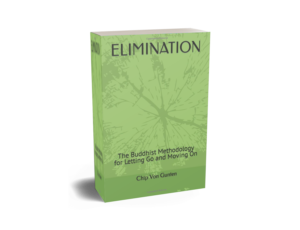
And that book became sort of a “self-authorship” kind of book, not a “self help.” This is the part most self-help books skip. They want to rush straight to victory, give you a plan to fix your life with a power point slide show and a bullet point list, meanwhile, your salvation arrives next Tuesday.
No, the real work happens down in the trenches where people wrestle with questions that don’t have easy answers. Who am I when things go wrong? What do I believe about myself when no one is cheering? What the hell am I going through, and why?
Dignity is the quiet center of all this. Not pride. Not ego. It’s dignity.
Dignity is the understanding that your worth does not vanish just because life becomes difficult. It is the refusal to abandon yourself even when the world gets loud with judgment or indifference. It is the simple belief that every human being has a place on this planet that cannot be revoked.
When a person discovers that idea, adversity begins to change shape.
The same emotions that once felt like anchors start acting like scaffolding. Anger becomes fuel. Confusion becomes curiosity. Pain becomes a signal pointing toward something that needs to be understood rather than avoided. The climb does not become easy, but it becomes possible.
And once you see that pattern, you start noticing it everywhere.
The strongest people you meet are rarely the ones who had everything handed to them. They are the ones who crawled through difficult seasons and came out with their dignity intact. They carry themselves differently. Not louder. Not tougher. Just steadier. Like someone who has been through a storm and learned how to walk again without waiting for the weather to change.
I didn’t come to these ideas from an academic desk. My new book Word Grit was not written from the perspective of a psychologist or a motivational speaker with a clean whiteboard and a five step program. It was written from experience. From years of watching people live in messy environments where survival is not a metaphor.
I grew up around toxic family dynamics. Difficult relationships. The kind of emotional climates where people can lose themselves if they are not careful. I have watched friends disappear into addiction. I have seen good people wrestle with depression, addiction, and that quiet, creeping thought that maybe they do not matter as much as everyone else seems to.
Those experiences leave marks. They also leave questions.
Like a lot of people, I spent years trying to understand what any of it meant. Why some people collapse under pressure while others somehow rebuild themselves out of the same wreckage. Why certain individuals can walk through humiliation, heartbreak, or failure and still come out carrying a stubborn belief that their life has value.
Over time I started noticing something simple but important.
People going through adversity often don’t have the language to describe what they are feeling. They know something inside them is bruised. They feel the weight of it every day. But when they try to explain it, the words come out thin and incomplete.
I would ask my kids this question when they were cranky, or confused, or upset:
“Are you mad, sad or glad?”
This simple question was meant for my kids to be empowered…and to reframe their feelings into something that they could understand.
If they were trying to figure out things, but didn’t know what emotions they were wrestling with, breaking it down to the most simple was the fix. Otherwise, going through turmoil and not knowing how to define what that turmoil really is, is like trying to describe a storm with a flashlight.
That observation is where Word Grit takes shape.
I think about the vocabulary of survival. The words that sit quietly underneath the human endurance through suffering. Words people feel deeply about, but rarely stop to examine. Each concept, or what I like to call a “word essay,” marks a place on the emotional map where someone decided either to give up or keep moving.
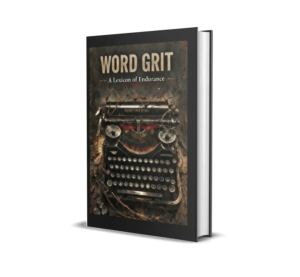
My new book explores words the way a traveler studies landmarks. Through short stories. Reflections. Scenes pulled from the rough edges of ordinary life. Not written from above, but written from inside the experience.
Because the truth is simple. Life knocks people down. Sometimes hard. Sometimes repeatedly. I mean, there are only so many times you can run into that brick wall until you finally learn something from it.
And buried underneath all of that struggle is something stubborn and difficult to erase. A core belief that every person has the right to their own dignity. No matter where they came from. No matter what mistakes they made. No matter how many times they had to rebuild themselves from scratch.
Word Grit is about recognizing that the very emotions people feel: fear, anger, confusion, can become the materials used to build strength. They become scaffolding. Something to climb instead of something to collapse under.
And if you stay with the climb long enough, you start to see the strange truth hidden inside adversity.
The suffering was never just suffering. It was instruction. It was construction. It was the slow, stubborn work of becoming someone who stands firm in their own dignity. The adversity builds you.

Exploring the known and the unknown with a beat writer’s eye for truth
Related Posts

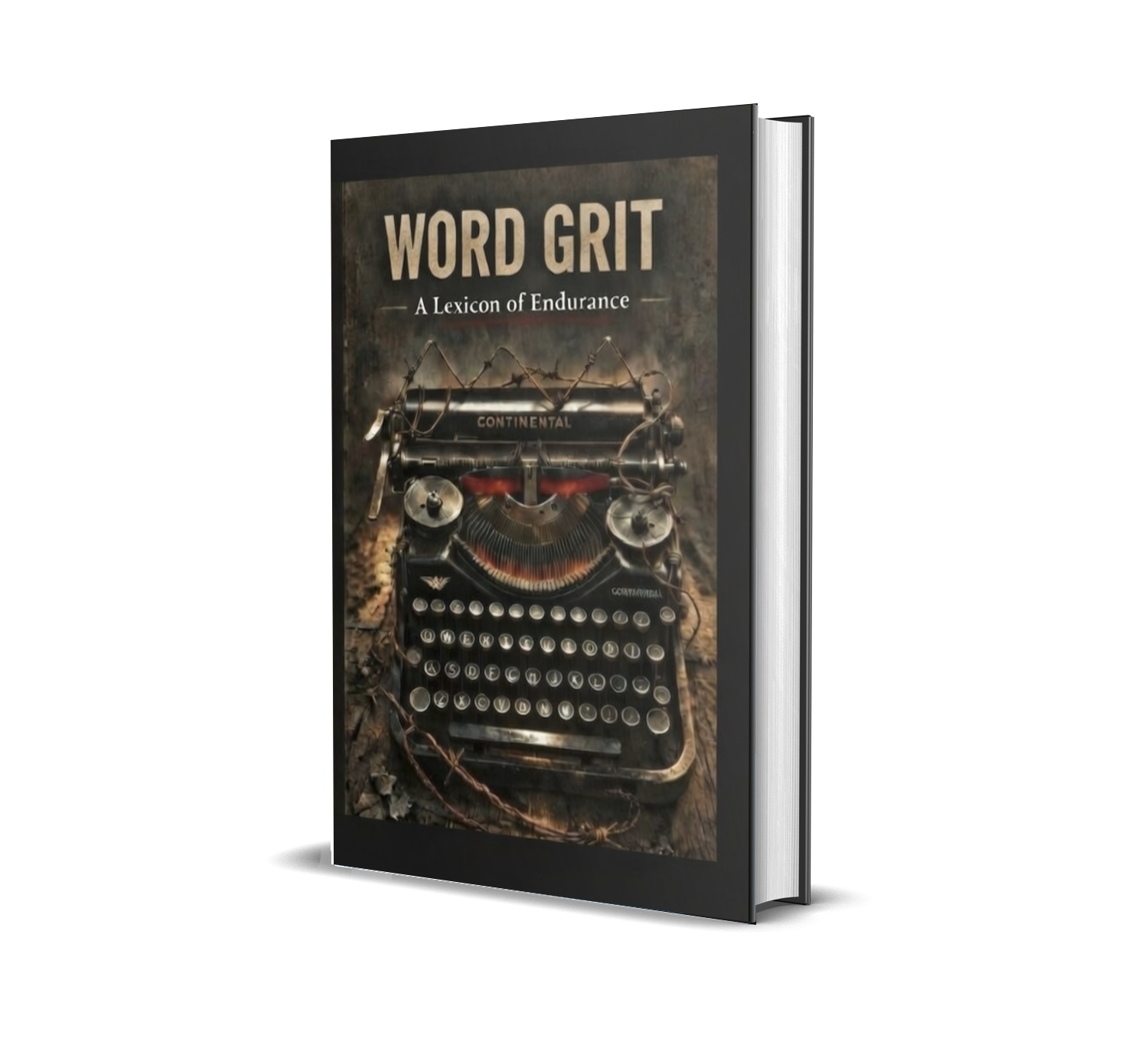
Word Grit – A Lexicon of Endurance
Word Grit is a raw, unfiltered street philosophy collection of beat writings. Truth doesn't ask for permission to speak the truth. It's not about comfort; it's about clarity, grit, and the relentless pursuit of authenticity.

Meter’s Running – A Digital Marketing Playbook
Meter's Running is a digital marketing playbook drawn from nearly a decade of freelance client work — part memoir, part manual. Coming soon.