
We love the cinematic montage: the swelling music, the sweat dripping in slow motion, the sudden transition from rock bottom to the podium. We have a cultural obsession with the “triumph.”
But that’s not where the work happens.
The real comeback is un-cinematic. It is boring, dusty, and physically heavy. It doesn’t happen at the finish line; it happens in the blueprinting phase, when the scaffolding of your previous life has collapsed and you’re standing in the wreckage, just trying to find a hammer that isn’t broken.
Picking Up Nails in the Mud
When suffering arrives, it doesn’t just hurt; it deconstructs. It pulls the pins out of your routines, your confidence, and your sense of direction. When the dust settles, you aren’t standing on a platform—you’re standing in a debris field.
The “Quiet Comeback” begins here. It isn’t about “winning” or “overcoming.” It’s about the mechanical act of salvage. It’s the decision to pick up one nail, wipe off the mud, and set it aside. Then you find another.
There is no soundtrack for this. There is only the damp weight of the task and the internal silence that follows a disaster.
The Field Report: Mechanical Habits
Resilience is often framed as a mental state, but a comeback is a physical project. If you wait for the “inspiration” to rebuild, you’ll be sitting in the ruins forever. You have to move before you feel like moving.
-
The Inventory of What’s Left: Acknowledging what survived collapse. It might just be a single habit, a stubborn streak, or a literal tool. You don’t need a whole lumberyard to start; you just need to know what’s still usable.
-
Low-Dopamine Progress: In the wreckage, there are no big wins. There are only small, repetitive movements. Making the bed. Answering one email. Walking to the end of the block. These aren’t “milestones”—they are structural supports. They keep the ceiling from falling any further.
-
The Tolerance for Friction: Rebuilding feels wrong. It feels slow and inefficient compared to the “old you.” The Quiet Comeback requires you to accept that everything will take three times as long and feel twice as heavy. Friction isn’t a sign that you’re failing; it’s proof that you’re moving against the weight of the world.
Rebuilding without the “Why”
We are told we need a “why” to survive. But sometimes, in the thick of the grind, the “why” is too heavy to carry. Sometimes the “why” is buried under the rubble.
That’s fine.
You don’t need a grand purpose to hammer a nail. You just need to strike it true.
The architecture of a comeback is built on the “how.” How do I get through the next hour? How do I stabilize this one corner of my day? Clarity is earned through the friction of the act itself. Eventually, once the walls are back up and the roof is tight, you’ll be able to look around and figure out what the house is actually for.
But for now? Just keep your eyes on the mud. There’s another nail over there.
Exploring the known and the unknown with a beat writer’s eye for truth
Related Posts



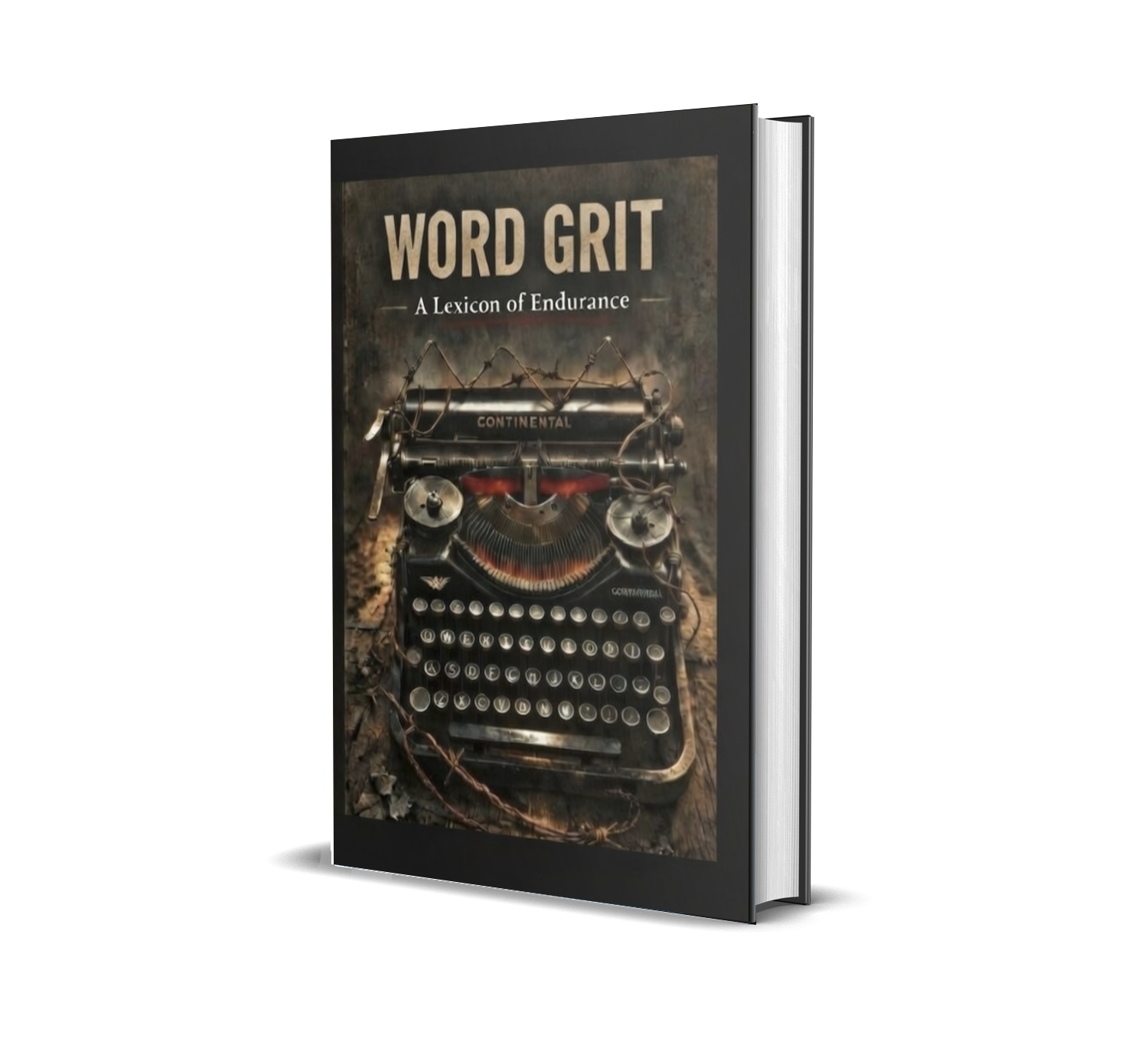
Word Grit – A Lexicon of Endurance
Word Grit is a raw, unfiltered street philosophy collection of beat writings. Truth doesn't ask for permission to speak the truth. It's not about comfort; it's about clarity, grit, and the relentless pursuit of authenticity.
Meter’s Running – A Digital Marketing Playbook
Meter's Running is a digital marketing playbook drawn from nearly a decade of freelance client work — part memoir, part manual. Coming soon.