I’ve been circling the same ideas for years, writing them from different angles and in different forms, only to hide the work away on hard drives. If authenticity and honesty sit at the top of the value chain for me, then the natural move is to stop waiting for permission or perfect clarity and write while things are still unresolved, this being the cleanest version so far.
Most people wait until their work feels “ready,” calling it strategy, when it’s really protection from exposure, and I did the same by guarding ideas I was afraid would be taken. Eventually I learned that waiting quietly kills more books than rejection ever will, which is why I now put the work out there, rough edges and all.
The first real book I worked on wasn’t born out of solitude or self-expression. It was a sales communication training manual, developed when I was working in sales at a Fortune 500 company. It came from collaboration. Interviews. Whiteboards. Conversations that stretched late into the day. I wasn’t trying to say something personal. I was training salespeople how to communicate better with their customers.
So, I was trying to translate experience. To listen closely enough, so that what people were doing instinctively could be turned into language someone else could use. That book came from a team, from a shared problem, from a practical need. It taught me discipline. Responsibility. How to get out of my own way and let the material speak through structure. And that training reached hundreds of people in the corporate world. And I’m proud of that.
Then everything stopped.
A layoff will do that. It creates a silence you don’t plan for. I had severance. I had time. Most importantly, I had a supportive wife, a partner who believed in me. For the first time in a long while, no one was waiting on output. No meetings. No deadlines pretending to be emergencies. Just days that opened up and asked uncomfortable questions. When you remove the noise, you’re left with whatever’s underneath. What was underneath for me wasn’t ambition. It was a need for clarity.
That’s where Elimination came from. Not as a career move, but as a way to steady my head. I wasn’t trying to build a platform or chase relevance. I was trying to understand how awareness worked. How Buddhist philosophy had helped me clear space in my thinking. How attention, breath, and subtraction mattered more than accumulation. That book was written alone, slowly, without an audience in mind. It taught me how to sit still with an idea long enough for it to reveal itself instead of forcing it into shape.
Between those two books, I learned something important. The ROQNROL sales book taught me how to write with others. Elimination taught me how to write alone. Neither taught me how to stay in the work publicly, over time, without hiding until it felt finished.
That gap matters.
And so, this is how I’m doing it with this new book: Word Grit. I’ve decided to make a website to show the workings of the book, as I write it.
Writing in public isn’t exhibitionism. It isn’t oversharing. It’s a discipline. It’s the decision to let the work exist while it’s still forming. To allow drafts to breathe. To accept that meaning often sharpens through repetition, not secrecy. When I started writing, that’s what I was testing. Whether words could carry weight before they were polished. Whether a short vignette could hold truth without explanation. Whether a character could stand in for a feeling most people avoid naming.
Working in public risks misunderstanding and exposure, but I choose it because honesty and integrity matter more to me than polish. Polish creates distance and the illusion of completion, while writing plainly and publicly preserves voice and keeps the work honest. It also holds me accountable to the work itself, which is essential because Word Grit matters to both me and the people it’s written for.
Readers, in this context, aren’t consumers. They’re witnesses. Some recognize themselves in the material. Some don’t. Some stay for a while and move on. That’s not a failure. That’s how real work moves through the world. You don’t chase everyone. You don’t explain yourself to exhaustion. You keep showing up. You keep shaping the sentences. You let the work tell you what it needs next.
I didn’t start with this philosophy. I didn’t arrive at it through theory. I worked my way here through collaboration, collapse, and solitude. Through listening, through silence, through staying when it would’ve been easier to wait. I’m still writing it, and I think it’s a good way to go.
Exploring the known and the unknown with a beat writer’s eye for truth
Related Posts



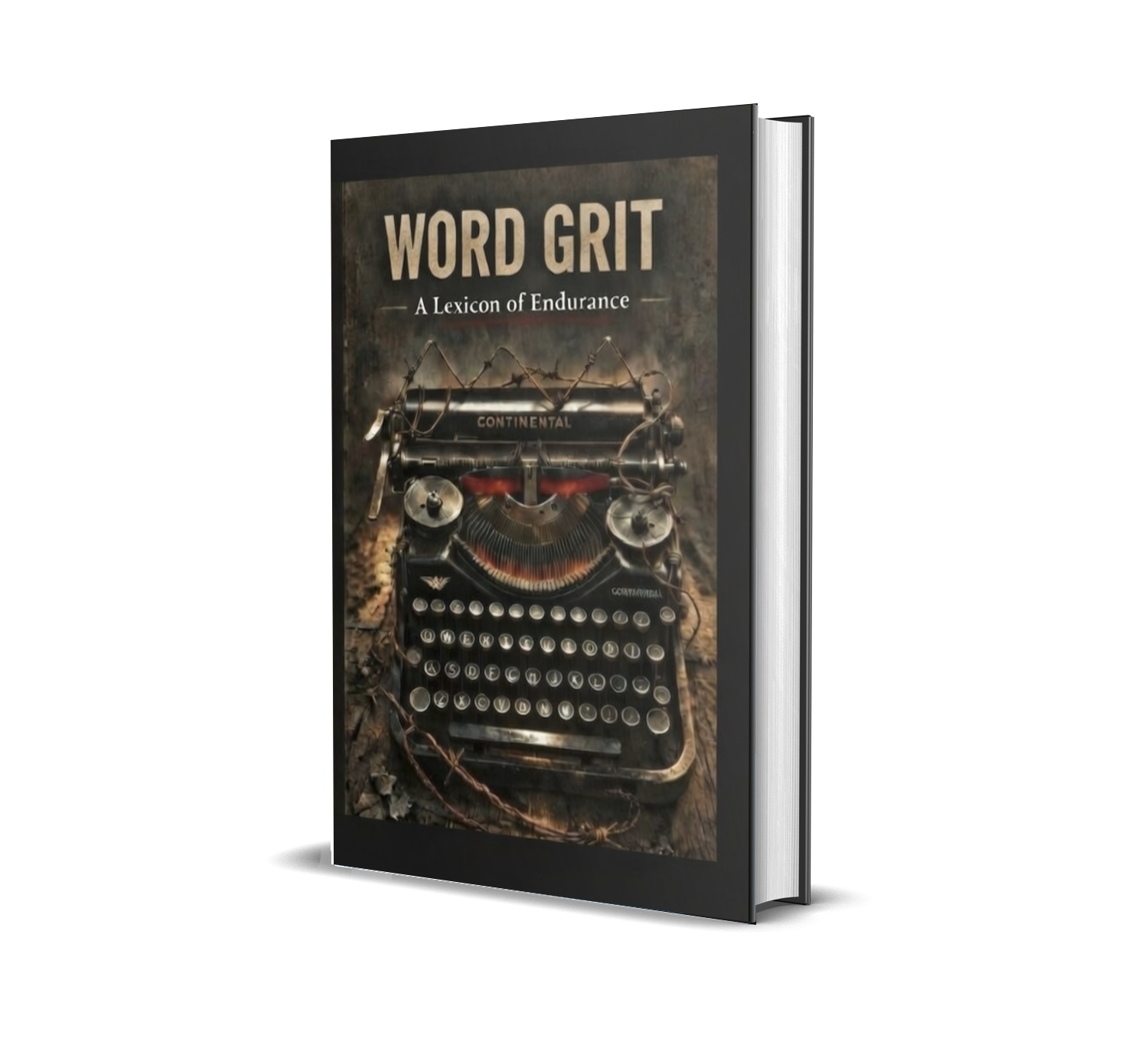
Word Grit – A Lexicon of Endurance
Word Grit is a raw, unfiltered street philosophy collection of beat writings. Truth doesn't ask for permission to speak the truth. It's not about comfort; it's about clarity, grit, and the relentless pursuit of authenticity.